google.com, pub-2829829264763437, DIRECT, f08c47fec0942fa0

Saturday, December 30, 2017

Starship of the Planet Earth

Starship of the Planet Earth


In the time line of our world, things have gone somewhat more slowly. We are not yet ready for the stars. But perhaps in another century or two, when the solar system is all explored, we will also have put our planet in order. We will have the will and the resources and the technical knowledge to go to the stars. We will have examined from great distances the diversity of other planetary systems, some very much like our own and some extremely different. We will know which stars to visit. Our machines and our descendants will then skim the light years, the children of Thales and Aristarchus, Leonardo and Einstein.

We cannot yet directly see the planets of other stars, tiny points of light swamped in the brilliance of their local suns. But we are becoming able to detect the gravitational influence of an unseen planet on an observed star. Imagine such a star with a large “proper motion”, moving over decades against the backdrop of more distant constellations; and with a large planet, the mass of Jupiter, say, whose orbital plane is by chance aligned at right angles to our line of sight.

Planet Earth. Photo by Elena

When the dark planet is, from our perspective, to the right of the star, the star will be pulled a little to the right, and conversely when the planet is to the left. Consequently, the path of the star will be altered, or perturbed, from a straight line to a wavy one. The nearest star for which this gravitational perturbation method can be applied is Barnard’s Star, the nearest single star. The complex interactions of the three stars in the Alpha Centauri system would make the search for a low-mass companion there very difficult.

Even for Barnard’s Star, the investigation must be painstaking, a search for microscopic displacements of position on photographic plates exposed at the telescope over a period of decades. Two such quests have been performed for planets around Barnard’s Star, and both have been by some criteria successful, implying the presence or two or three planets of Jovian mass moving inn an orbit, calculated by Kepler’s third law, somewhat closer to their star than Jupiter and Saturn are to the Sun. But unfortunately, the two sets of observations seem mutually incompatible. A planetary system around Barnard’s Star may well have been discovered, but an unambiguous demonstration awaits further study.

A digital tree. Photo by Elena

Themes of Space and Time

Themes of Space and Time


Worlds and stars, like people, are born, live and die. The themes of space and time are thus intertwined.

We can’t however forget that the lifetime of a human being is measured in decades, but the lifetime of any star is a hundred million times longer.

Compared to a star, Humans are like mayflies, fleeting ephemeral creatures who live out their whole lives in the course of a single day of the planet Earth. Indeed, from the point of view of mayfly or firefly, human beings are stolid, boring, immovable, offering hardly a hint that they ever do anything. From a point of view of a star, on the contrary, a human being is a tiny flash, one of billions of brief lives flickering tenuously on the surface of a strangely solid, anomalously cold, exotically remote sphere of silicate and iron.

In all those other worlds in space there are events in progress, occurrences that will determine their future. And on this tiny planet called Earth, this moment in history is a historical branch point. What you do with your world in this time will propagate down through the centuries and powerfully determine the destiny of your descendants and their fate, if any, among the stars.

A pinapple. If you wish to make an pineapple salad from scratch, you must first invent the universe. Image: © Elena 

A star is a kind of cosmic kitchen inside which atoms of hydrogen are cooked in heavier atoms. Stars condense from interstellar gas and dust, which are composed mostly of hydrogen. But the hydrogen was made in the Big Bang, the explosion that began the Cosmos.

Suppose you take an apple pie and cut it in half; take one of the two pieces, cut it in half; and continue. How many cuts before you are down to a single atom? The answer is about ninety successive cuts. Of course, no knife could be sharp enough, the pie is too crumbly, and the atom would in any case be too small to see unaided. But there is a way to do it.

A typical atom has a kind of cloud of electrons on the outside. Electrons are electrically charged, as their name suggests. The charge is arbitrarily called negative. Electrons determine the chemical properties of the atom – the glitter of gold, the cold feel of iron, the crystal structure of the carbon diamond. Deep inside the atom, hidden far beneath the electron cloud, is the nucleus, generally composed of positively charged protons and electrically neural neutrons. Atoms are very small – one hundred million of them end to end would be as large as the tip of your little finger. But the nucleus is a hundred thousand times smaller still, which is part of the reason it took so long to be discovered.

Space Travel and Time Travel

Space Travel and Time Travel


Space travel and time travel are closely related. According to Einstein, we can travel fast into space only by traveling near the speed of light. In this case, the crew of a ship travels into the future, with relativistic spaceflight. Besides, we travel slowly into the future all the time, at the rate of one day every day.

But what of the past? Could we return to the past and change it? Could we make events turn out differently from what the history books assert?

Many physicists believe that a voyage into the past is impossible.

Indeed, even if you had a device that could travel backwards in time and if you journeyed into the past and prevented your parents from meeting, they explain, you would never have been born – which is something of a contradiction, since you clearly exist. Thus you would be unable to do anything that would make any difference.

Like the proof of the irrationality of some mathematical theories and like the discussion of simultaneity in special relativity, this is an argument in which the premise is challenged because the conclusion seems absurd.
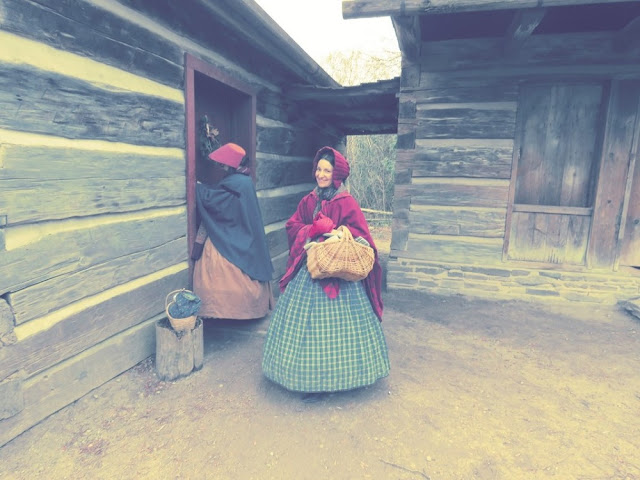
A Time Traveler caught in picture by Elena

But we can’t forget that two alternative histories are possible, despite the fact that we are seemingly condemned to experience only one of them. It is possible that time itself has many potential dimensions.

History consists of a complex bundle of deeply interwoven threads, political, cultural, social, economic forces that are not easily unraveled. The countless unpredictable, random and small events that flow on continually often have no long-range consequences.

Some of the event, however, – those occurring at critical junctures or branch points, – may change the pattern of history.

Two alternative histories mean that two equally valid realities could exist side by side, that’s the reality we know and another one – a reality in which we were never born.

Suppose you could go back into the past and change it – by any insignificant action. Then, it is argued, you would have set into motion a different sequence of historical events.

In this case, those events you left behind in our time line would never know about. If that kind of time travel were possible, then every imaginable alternative history might in some sense really exist.

There may be cases where profound changes can be made by relatively trivial adjustments. The farther in the past such an event is, the more powerful may be its influence – because the lever arm of time becomes longer.

A squirrel. Do we live in alternative history or do the others? (Quotations from Megan Jorgensen). Image by ©  Elena

Time Travel


Space travel and time travel are connected. We can travel fast into space only by traveling fast into the future. But what of the past? Could we return to the past and change it? Could we make events turn out differently from what the history books assert? We travel slowly into the future all the time, at the rate of one day every day. With relativistic spaceflight we could travel fast into the future. But many physicists believe that a voyage into the past is impossible. Even if you had a device that could travel backwards in time, they say, you would be unable to do anything that would make any difference. If you journeyed into the past and prevented your parents from meeting, they you would never have been born – which is something of a contradiction, since you clearly exist. Like the proof of the irrationality of V2, like the discussion of simultaneity in special relativity, this is an argument in which the premise is challenged because the conclusion seems absurd.

But other physicists propose that two alternative histories, two equally valid realities, could exist side by side – the one you know and the one in which you were never born. Perhaps time itself has many potential dimensions, despite the fact that we are condemned to experience only one of them.

Do we live in alternative history or do the others? (quotations of Megan Jorgensen). Image by © Elena

Suppose you could go back into the past and change it – by persuading Queen Isabelle not to support Christopher Columbus, for example. Then, it is argued, you would have set into motion a different sequence of historical events, which those you left behind in our time line would never know about. If that kind of time travel were possible, then every imaginable alternative history might in some sense really exist.

History consists for the most part of a complex bundle of deeply interwoven threads, social, cultural and economic forces that are not easily unraveled. The countless small, unpredictable and random events that flow on continually often have no long-range consequences. But some, those occurring at critical junctures or branch points, may change the pattern of history. There may be cases where profound changes can be made by relatively trivial adjustments. The farther in the past such an event is, the more powerful may be its influence – because the longer the lever arm of time becomes.

Destiny of Your Descendants

Destiny of Your Descendants


There are about one hundred billion planetary systems in the Milky Way Galaxy awaiting exploration. Many of them are achingly beautiful.

A few of these systems are hospitable for the Humans, and most appear hostile.

In some worlds there are many stars in the daytime sky and many moons in the heavens at night. Some moons are so close that their planet looms high in the heavens, covering half the sky. In some other worlds great particle ring systems are soaring from horizon to horizon. And some worlds look out onto a vast gaseous nebula, the remains of an ordinary star that once was and is no longer.

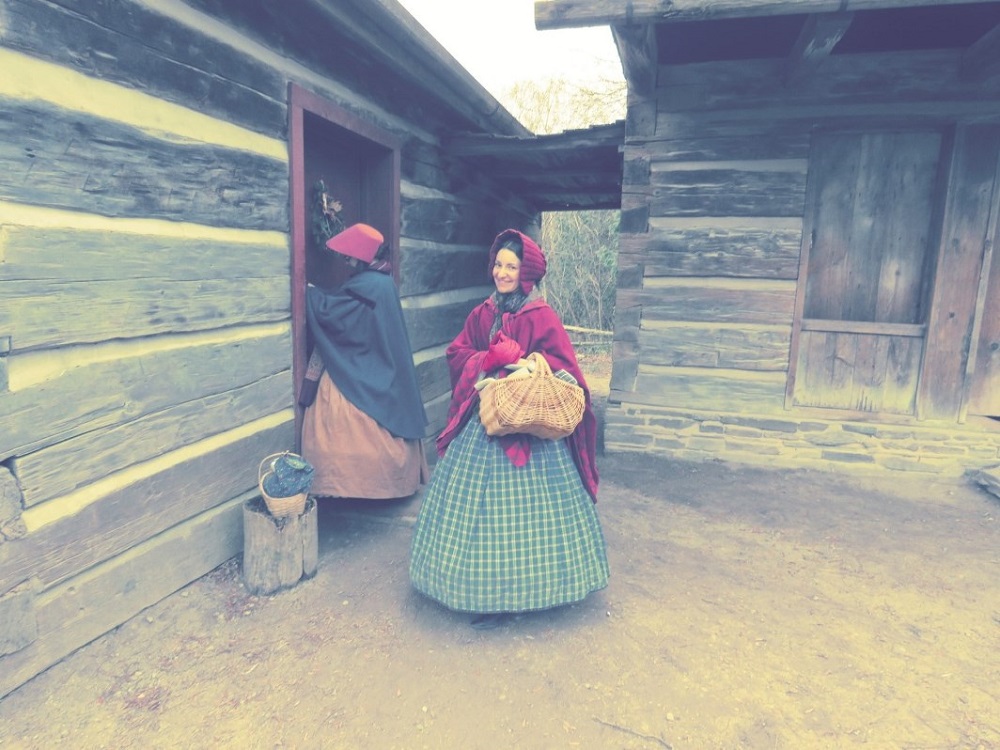
Pioneer Village. It is a lovely fantasy, to explore those worlds that never were. Image: © Elena

In the future, in all those skies, rich in distant and exotic constellations, the Human will always remember a faint yellow star – perhaps barely seen by the naked eye, perhaps visible only through the telescope… the home star of the fleet of interstellar transports exploring this tiny region of the great Milky Way Galaxy.

You will venture to the stars. Your first survey ships to Alpha Centauri and Barnard’s Star, Sirius and Tau Ceti will be followed by great fleets of interstellar transports. First under construction in Earth orbit – unmanned survey ships, they will develop into liners for immigrants, immense trading ships to plow the seas of space. On all these ships there will be symbols and writing of your mother planet.

Yes, you are not yet certain how many planetary systems there are in your galaxy, but let’s assure you that there is a great abundance of them (even if your immediate vicinity, there is not just one, but in a sense four systems: Jupiter, Saturn and Uranus each has a satellite system that, in the relative sizes and spacings of the moons, resembles closely the planets about the Sun).

View of our Galaxy. Photo: Elena
The themes of space and time are, as we have seen, intertwined. Worlds and stars, like people, are born, live and die. The lifetime of a human being is measured in decades; the lifetime of the Sun is a hundred million times longer. Compared to a star, we are like mayflies, fleeting ephemeral creatures who live out their whole lives in the course of a single day. From the point of view of mayfly, human beings are stolid, boring, almost entirely immovable, offering hardly a hint that that they ever do anything. From a point of view of a star, a human being is a tiny flash, one of billions of brief lives flickering tenuously on the surface of a strangely cold, anomalously solid, exotically remote sphere of silicate and iron.

In all those other worlds in space there are events in progress, occurrences that will determine their future. And on our small planet, this moment in history is a historical branch point as profound as the confrontation of the Ionian scientists with the mystics 2,500 years ago. What we do with our world in this time will propagate down through the centuries and powerfully determine the destiny of our descendants and their fate, if any, among the stars.

The destiny of our descendants and their fate, if any, lies among the stars. Image: © Megan Jorgensen (Elena)

Island Universes

Island Universes


Well into the twentieth century, astronomers believed that there was only one galaxy in the Cosmos, the Milky Way – although in the eighteenth century Thoomas Wright of Durban and Immanuel Kant of Königsberg each had a premonition that the exquisite luminous spiral forms, viewed through the telescope, were other galaxies. Kant suggested explicitly that M3 in the constellation Andromeda was another Milky Way, composed of enormous numbers of stars, and proposed calling such objects by the evocative and haunting phrase “island universes”.

Some scientists toyed with the idea that the spiral nebulae were not distant island universes but rather nearby condensing clouds of interstellar gas, perhaps on their way to make solar systems. To test the distance if the spiral nebulae, a class of intrinsically much brighter variable stars was needed to furnish a new standard candle. Such stars, identified in M31 by Edwin Hubble in 1924, were discovered to be alarmingly dim, and it became apparent that M31 was a prodigious distance away, a number now estimated at a little more than two million light-years. But if M31 were at such a distance, it could not be a cloud of mere interstellar dimensions; it had to be much larger – an immense galaxy in its own right. And the other, fainter galaxies must be more distant still, a hundred billion of them, sprinkled through the dark to the frontiers of the known Cosmos.

Light Island of the Universes. We make our world significant by the courage of our questions and by the depth of our answers. Image : © Elena

As long as there have been humans, we have searched for our place in the Cosmos. In the childhood of our species (when our ancestors gazed a little idly at the stars), among the Ionian scientists of ancient Greece, and in our own age, we have been transfixed by this question: Where are we? Who are we? We find that we live on an insignificant planet of a humdrum star lost between two spiral arms in the outskirts of a galaxy which is a member of a sparse cluster of galaxies, tucked away in some forgotten corner of a universe in which there are far more galaxies than people. This perspective is a courageous continuation of our penchant for constructing and testing mental models of the skies; the Sun as a red-hot stone, the stars as celestial flame, the Galaxy as the backbone of night.

Since Aristarchus, every step in our quest has moved us farther from center stage in the cosmic drama. There has not been much time to assimilate these new findings. The discoveries of Shapley and Hubble were made within the lifetimes of many people still alive today. There are those who secretly deplore these great discoveries, who consider every step a demotion, who in their heart of hears still pine for a universe whose center, focus and fulcrum is the Earth. But if we are to deal with the Cosmos we must first understand it, even if our hopes for some unearned preferential status are, in the process, contravened. Understanding where we live is an essential precondition for improving the neighborhood. Knowing what other neighborhoods are like also helps. If we long for our planet to be important, there is something we can do about it. We make our world significant by the courage of our questions and by the depth of our answers.

We embarked on our cosmic voyage with a question first framed in the childhood of our species and in each generation asked anew with undiminished wonder: What are the stars? Exploration is in our nature. We began as wanderers, and we are wanderers still. We have lingered long enough on the shores of the cosmic ocean. We are ready at last to set sail for the stars.

Island. Photo: Elena