google.com, pub-2829829264763437, DIRECT, f08c47fec0942fa0

Thursday, January 11, 2018

Jean-François de La Pérouse

Jean-François de La Pérouse


The Native Americans drove increasingly harder bargains. To La Pérouse’s annoyance, they also resorted to pilferage, largely of iron objects, but once of the uniformes of French naval officers hidden under their pillows as they were sleeping one night surrounded by armed guards – a feat worthy of Harry Houdini. La Pérouse followed his royal orders to behave peaceably but complained that the natives “believed our forbearance inexhaustible.” He was disdainful of their society. But no serious damage was done by either culture to the other. After reprovisioning his two ships La Pérouse sailed out of Lituya Bay, never to return. The expedition was lost in the South Pacific in 1788; La Pérouse and all but one of the members of his crew perished”.

When La Pérouse was mustering the ship’s company in France, there were many bright and eager young men who applied but were turned down. One of them was a Corsican artillery officer named Napoleon Bonaparte. It was an interesting branch point in the history of the world. If La Pérouse had accepted Bonaparte, the Rosetta stone might never have been found. Champollion might never have decrypted Egyptian hieroglyphics, and in many more important respects our recent history might have been changed significantly.

Jean-François de La Perouse, portrait de l'époque

Exactly a century later Cowee, a chief of the Tlingit, related to the Canadian anthropologist G. T. Emmons a story of the first meeting of his ancestors with the white man, a narrative handed down by word of mouth only. The Tlingit possessed no written records, nor had Cowee ever heard of La Pérouse. This a paraphrase of Cowee’s story:

Late one spring a large part of Tlingit ventured North to Yakutat to trade for copper. Iron was even more precious, but it was unobtainable. In entering Liuya Bay four canoes were swallowed by the waves. As the survivors made camp and mourned for their lost companions two strange objects entered the Bay. No one knew what they were. They seemed to be great black birds with immense white wings. The Tlingit believed the world had been created by a great bird which often assumed the form of a raven, a bird which had freed the Sun, the Moon and the Stars from the boxes in which they had been imprisoned. To look upon the Raven was to be turned to stone. In their fright, the Tlingit fled into the forest and hid. But after a while finding that no harm had come to them, a few more enterprising souls crept out and rolled leaves of the skunk cabbage into crude telescopes, believing that this would prevent being turned to stone. Through the skunk cabbage, it seemed that the great birds were folding their wings and that flocks of small black messengers arose from their bodies and crawled upon their feathers.

Now one nearly blind old warrior gathered the people together and announced that his life was far behind him; for the common good he would determine whether the Raven would turn his children into stone. Putting on his robe of sea otter fur, he entered his canoe and was paddled seaward to the Raven. He climbed upon it and heard strange voices. With his impaired vision he could barely make out the many black forms moving before him. Perhaps they were crows. When he returned safely to his people they crowded about him, surprised to see him alive. They touched him and smelled him to see if it was really he. After much thought the old man convinced himself that it was not the god-raven that he had visited, but rather a giant canoe made by men. The black figures were not crows but people of a different sort. He convinced the Tlingit, who then visited the ships and exchanged their furs for many strange, chiefly iron.

Technical Civilizations

Technical Civilizations


There is evidence that planets are a frequent accompaniment of star formation; in the satellite systems of Jupiter, Saturn and Uranus, which are like miniature solar systems; in theories of the origin of the planets; in studies of double stars; in observation of accretion disks around stars; and in some preliminary investigations of gravitational perturbations of nearby stars. Many, perhaps even most stars may have planets.

We take the fraction of stars that have planets, f(p), as roughly equal to 1/3. Then the total number of planetary systems in the Galaxy would be Nxf(p) =1.3 x 10(11) – the symbol = means here “approximately equal to”). If each system were to have about ten planets, as ours does, the total number of worlds in the Galaxy would be more than a trillion, a vas arena for the cosmic drama.

In our own solar system there are several bodies that may be suitable for life of some art: the Earth certainly, and perhaps Mars, Titan and Jupiter. Once life originates, it tends to be very adaptable and tenacious. There must be many different environments suitable for life in a given planetary system. But conservatively we choose n€=2. Then the number of planets in the Galaxy suitable for life becomes N f(p) n(e) – 3 x10(11).

Sun and planets. There may be a billion planets on which technical civilizations now exist only in our Galaxy. Image © Elena

Experiments show that under the most common cosmic conditions the molecular basis of life is readily made, the building blocks of molecules able to make copies of themselves. We are now on less certain ground; there may, for example, be impediments in the evolution of the genetic code, although we think this unlikely over billions of years of primeval chemistry. We choose f(1)- 1/3, implying a total number of planets in the Milky Way on which life has arisen at least once as N f(p) n(e), f(1) = 1x 10(11), a hundred billion inhabited worlds. That in itself is a remarkable conclusion. But we are not yet finished.

The choices of f(1), and f(e) are more difficult. On the one hand, many individually unlikely steps had to occur in biological evolution and human history for our present intelligence and technology to develop. On the other hand, there must be many quite different pathways to an advanced civilization of specified capabilities. Considering the apparent difficulty in the evolution of large organisms represented by the Cambrian explosion,, let us choose f(1) x f(e) = 1/100, meaning that only 1 percent of planets on which life arises eventually produce a technical civilization. This estimate represents some middle ground among the varying scientific opinions. Some think that the equivalent of the step from the emergence of trilobites to the domestication of fire gores like a shot in all planetary systems; other think that even given ten of fifteen billion years, the evolution of technical civilizations is unlikely. This is not a subject on which we can do much experimentation as long as our investigations are limited to a single planet. Multiplying these factors together, we find a billion planets on which technical civilizations have arisen at least once. But that is very different from saying that there are a billion planets on which technical civilizations now exist. For this, we must also estimate all the factors.

Secrets of Evolution

Secrets of Evolution


The secrets of evolution are death and time.

The death of enormous numbers of lifeforms that were imperfectly adapted to the environment; and time for a long succession of small mutations that were by accident adaptive, time for the slow accumulation of patterns of favorable mutations. Part of the resistance to Darwin and Wallace derives from our difficulty in imagining the passage of the millennia, much less the aeons. What does seventy million years mean to beings who live only one-millionth as long& We are like butterflies who flutter for a day and think it is forever.

What happened here on Earth may be more or less typical of the evolution of life on many worlds; but in such details as the chemistry or proteins or the neurology of brains, the story of life on Earth may be unique in all the Milky Way Galaxy.

The Earth condensed out of interstellar gas and dust some 4.6 billion years ago. We know from the fossil record that the origin of life happened soon after, perhaps around 4.9 billion years ago, in the ponds and oceans of the primitive Earth.

I hope the extraterrestrials remember how frail humans are (quotations from Megan Jorgensen). Image Virtual Worlds Old Painting Style by © Megan Jorgensen

The first living things were not anything so complex as a one-celled organism, already a highly sophisticated form of life. The first stirrings were much more humble. In those early days, lightning and ultraviolet light from the Sun were breaking apart the simple hydrogen-rich molecules of the primitive atmosphere, the fragments spontaneously recombining into more and more complex molecules.

The products of this early chemistry were dissolved in the oceans, forming a kind of organic soup of gradually increasing complexity, until one day, quite by accident, a molecule arose that was able to make crude copies of itself, using as building blocks other molecules in the soup.

About two-thirds of the mass of the human brain is in the cerebral cortex, devoted to intuition and reason. Humans have evolved gregariously.

How would we explain the global arms race to a dispassionate extraterrestrial observer? How would we justify the most recent destabilizing developments of killer-satellites, particle beam weapons, lasers, neutron bombs, cruise missiles, and the proposed conversion of areas the size of modest countries to the enterprise of hiding each intercontinental ballistic missile among hundreds of decoys? Would we argue that ten thousand targeted nuclear warheads are likely to enhance the prospects for our survival? What account would we give to our stewardship of the planet Earth?

Four billion years ago, the Earth was a molecular Garden of Eden. There were as yet no predators. Some molecules reproduced themselves inefficiently, competed for building blocks and left crude copies of themselves.

Every lifeform on Earth has a different set of instructions, written out in essentially the same language. The reason organisms are different is the differences in a nucleotide, copied in the next generation, which breeds true.

Since mutations are random nucleotide changes, most of them are harmful or lethal, coding into existence non-functional enzymes. It is a long wait before a mutation makes an organism work better. An yet it is that improbable event, a small beneficial mutation in a nucleotide a ten-millionth of a centimeter across, that makes evolution go.

With reproduction, mutation and the selective elimination of the least efficient varieties, evolution was well under way, even at the molecular level. As time went on, the molecules got better in reproducing. Those with specialized functions eventually joined together, making a kind of molecular collective – the first cell. Plant cells today have tint molecular factories, called chroloplasts, which are in charge of photosynthesis – the conversion of sunlight, water and carbon dioxide into carbohydrates and oxygen. The cells in a drop of blood contain a different sort of molecular factory, the mitochondrion, which combines food with oxygen to extract useful energy. These factories exist in plant and animal cells today but may once themselves have been free-living cells.

By about three billion years ago, a number of one-celled plants had joint together, perhaps because a mutation prevented a single cell from separating after splitting in two. The first multicellular organisms had evolved. Every cell of your body is a kind of commune, with once free-living parts all banded together for the common good. And you are made of a hundred trillion cells. We are, each of us, a multitude.

Relativistic Journey

Relativistic Journey


Nuclear accelerators are designed to allow for the increase of mass with increasing speed; if they were not designed in this way, accelerated particles would all smash into the walls of the apparatus, and there would be little to do in experimental nuclear physiques. A speed is a distance divided by a time. Since near the velocity of light we cannot simply add speeds, as we used to doing in the workday world, the familiar notions of absolute space and absolute time – independent of your relative motion – must give way. That is why you shrink during the flight near the velocity of light and that is the reason for time dilation.

Traveling close to the speed of light you would hardly age at all, but your friends and your relatives back home would be aging at the usual rate. When you returned from your relativistic journey, what a difference there would be between your friends and you, they having aged decades, say, and you having aged hardly at all! Traveling close to the speed of light is a kind of elixir of life. Because time slows down close to the speed of light, special relativity provides us with a means of going to the stars. But is it possible, in terms of practical engineering, to travel close to the speed of light? Is a star-ship feasible?

Vision of Mars. Traveling close to the speed of light is a kind of elixir of life. Source : Colourful Portal © Elena

Today we have preliminary designs for ships to take people to the stars. None of these spacecraft is imagined to leave the Earth directly. Rather, they are constructed in Earth orbit from where they are launched on their long interstellar journeys. One of them was called Project Orion after the constellation, a reminder that the ship’s ultimate objective was the stars. Orion was designed to utilize explosions of hydrogen bombs, nuclear weapons, against an inertial plate, each explosion providing a kind of “putt-putt”, a vast nuclear motorboat in space. Orion seems entirely practical from an engineering point of view. By its very nature it would have produced vast quantities of radioactive debris, but for conscientious mission profiles only in the emptiness of interplanetary or interstellar space. Project Orion was under serious development in the United States until the signing of the international treaty that forbids the detonation of nuclear weapons in space. This seems a great pity, because the Orion starship is the best use of nuclear weapons we can think of.

Victoria Park I

Victoria Park and Ecotherapy


 As an umbrella term for nature-based methods of physical and psychological healing, ecotherapy points to the need to reinvent psychotherapy and psychiatry as if nature and the human-nature relationship matters.

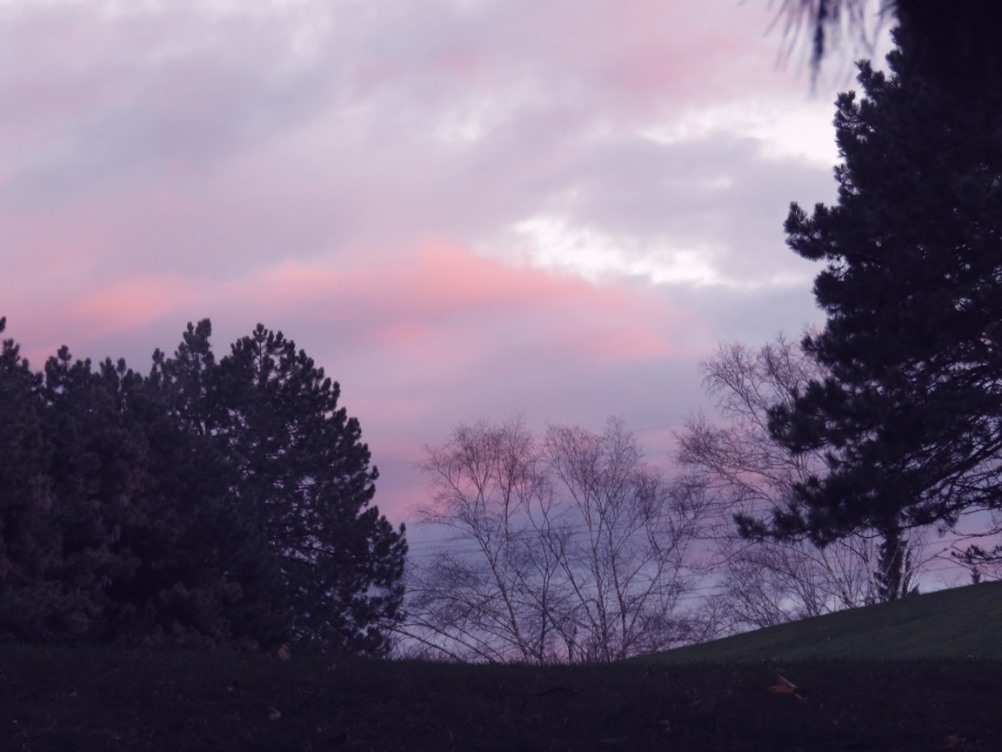
The treatment by ecotherapy and its perspective reveals the critical fact that people are intimately connected with, embedded in, and inseparable from the rest of nature. In Toronto's Victoria Park, it becomes clear that what happens to nature for good or ill impacts people and vice versa, leading to the development of new methods of individual and community psychotherapeutic diagnosis and treatment. 

Ecotherapeutic work as Clinebell conceived it takes guidance from an Ecological Circle of three mutually interacting operations or dynamics: 

Inreach: receiving and being nurtured by the healing presence of nature, place, Earth. 

Upreach: the actual experience of this more-than-human vitality as we relocate our place within the natural world. Outreach: activities with other people that care for the planet. 

Closing the circle keeps ecotherapy from narrowly focused self-absorption, further nature exploitation for human purposes, feel-good maneuvers, or thinking good thoughts as planetary panaceas. Note that a certificate in ecotherapy is not a license to do psychotherapy. Nevertheless, ecotherapy techniques are being taught to practicing psychotherapists, whose concentration on mending relationships and inner conflicts benefits from placement in the wider ecological context in which all human activity unfolds.

Overlapping Core Commitments of Ecotherapy without which ecotherapy would not be ecotherapy: Because human beings are an integral part of the natural world, what nourishes or diminishes that world nourishes or diminishes us. Although ecotherapy interventions tend to be much less invasive than drugs or psychotherapy, ecotherapists always put the well-being of clients first and carefully monitor potential safety and health concerns. 

 Ecotherapists believe that nonhuman forms of life have a right to exist for their own needs and purposes, and that this right includes leaving plant and animal ecocommunities intact and protecting the needs, health, and sense of agency of our animal companions.

 Ecotherapists regard the work as part of an ongoing collective effort to build just and sustainable communities in which all forms of life can delight and mature. Psychotherapy aims to help individuals understand and create meaning from emotional and psychological difficulties they are experiencing. 

Ecotherapy, utilising psychotherapeutic principles, forms a relationship to the natural world in order to enable us to make sense of our inner emotions and life experiences. Spending time in nature provides the space for inward reflection and the potential for transformation as we become conscious of our interconnectivity with the world around us.


Ecotherapy or ecopsychology, is the study of our psychological relations with the rest of nature on our planet.

Ecopsychology provides a solid theoretical, cultural, and critical foundation for ecotherapeutic practice.

We regard ecotherapy as applied ecopsychology. So both the terms can be used to describe the phenomenon.


Ecotherapy takes into account the scientific understandings of our universe and th indigenous wisdom

Grasping the fact of importance of ecotherapy deeply shifts our understanding of how to heal the human psyche.

We can learn more about the currently dysfunctional and even lethal human-nature relationship.

=

Ecotherapy as applied ecopsychology employs many methods in attempts to reconnect the psyche and the body with the terrestrial sources of all healing.

Ecotherapy is different from psychotherapy in its focus on transforming our relationship to the natural world and in its reliance on non-risky and non-intrusive interventions.

Ecotherapy recognizes and seeks to address how the pain of the ecological world shows up regularly and systematicaly as pain within and between human beings.


All the work unfolds within an Ecological Circle (see the work of founding father Howard Clinebell) that ethically links receiving and experiencing healing from nature, place, and Earth with giving something substantial back to the earthly sources of healing.

The Circle underlines the personal and collective need to transition from spectators, exploiters, and destroyers of the natural world into appreciators, lovers, advocates, and witnesses building a consciously regenerative relationship with that world.

Relationships of healing with nature, place, creatures, and Earth require us to acknowledge our participation in industrial, governmental, or organizational actions that harm the environment and to seek alternative actions whenever possible.


The relationship with nature holds diversity- cultural, ecological, epistemological, spiritual-to be a precious source of enrichment, value, and, ultimately, survival.

The more diverse the ecosystem, the greater its resiliency, creativity, and resourcefulness. That's the rule of vital importance in the healing.

According to Howard Clinebell, who wrote a book on the topic, the term Ecotherapy refers to healing and growth nurtured by healthy interaction with the earth.


Howard Clinebell also called ecotherapy “green therapy” and “earth-centered therapy.”

Ecotherapy is a union between the ideas of ecopsychology and psychotherapy.

Fundamental to ecotherapy is connection to the natural world we live within.


Ecotherapy uses a range of practices in order to help us connect with nature and with our ‘inner’ nature.

Personal distress can be alleviated by developing the mutual ultimate connection between inside and outside.

Through careful and constant learning to care for the natural environment we learn to care for and nurture ourselves.


Ecotherapy is about personal healing and healing for the earth.

Ecopsychology focuses on our connection with the natural environment.

In traditional psychology, the ‘psyche’ is seen in isolation from its natural environment.


Ecopsychologists see this split between mind and nature as being at the heart of our current ecological crisis.

”Understanding one’s existence as such is always an understanding of the world” (Martin Heidegger)

How we encounter and interpret the natural world creates a personal narrative that gives meaning to our emotions.


We may feel depressed, anxious, lost and alone, overwhelmed by our thoughts and feelings and unable to draw upon previous ways of coping.

Psychotherapy in combination with the natural environment allows us to develop new ways of understanding ourselves and feel integrated in our lives.

Spending time in nature provides the space for inward reflection and the potential for transformation as we begin to understand the universe.