google.com, pub-2829829264763437, DIRECT, f08c47fec0942fa0

Thursday, March 8, 2018

Bone Town

Bone Town

Matthew Hughes (From The Ugly Duckling)


The Martians had built their towns mostly out of stone and metal, crystal and glass. They had run water through channels in the floors – to cool the rooms and, Mather hypothesized, their slender feet – and grown fruit hydroponically from the walls. But in some parts of the planet, there had once been a fashion – perhaps it was a ritual requirement – for building in bone.

Martian architects had designed houses walled and floored in this sheets of ossiferous material that must have been peeled like veneer from the huge bones of gigantic sea creatures. Sometimes, the great ribs and femurs were used whole as structural members, trimmed and squared or rounded to the needed dimensions, often ornately carved into pillars and lintels. Still more of the stuff had been crushed into powder, then bound together with burnt lime to make a durable concrete for roads and doorsteps.

Building in bone made for houses that were filled with a diffuse and airy light that threw no shadows. The material was also porous, so the rooms breathed even though the windows were narrow and sealed with bronze shutters. The walls also had the quality of absorbing rather than reflecting sound ; Mather imagined that conversations in Martian rooms must have been muted, even the shouts and tumults of the aureus-eyed children softened and calmed.

He chose houses at random traversing hallways and peering into chambers. The places were empty, the inhabitants having packed up in no apparent hurry. Occasionally, he found items of abandoned furniture – more bone, a couple of metal frames, the less durable wooden parts long since turned to dust.

Some of the lines were curved, some straight. They met at odd angles and somehow contrived to draw Mather’s gaze into what seemed to be three-dimensional shapes. Illustration: Megan Jorgensen (Elena)

In a corner of one upstairs room, he found a bone table on which rested a scatter of Martian books…

The town sloped gradually from the landward end to the place where the sea had been, the finger of rock on which it was built also narrowing as it neared the vanished waves. At the very tip, the Martians had laid out a wide plaza, this one without a fountain. The pavement was fashioned from thousands of small tiles, their original bright colors now sun-fades to pale pastels, arranged in a border of stylized waves and sailing ships, blue against bronze, surrounding a great sinuous sea creature with huge eyes and triangular flukes.

A broad flight of bone-concrete steps led down from the open space to the former harbor, where two curved moles enclosed a sheltered basin with a seaward opening only wide enough for two of the slim, burnished craft to pass an once.

The buildings that stood at the edge of the open space were grander than the houses he had entered so far. Their entrances were wide metal doors between carved pillars of bone. The surfaces of the doors were worked in raised snake-script in bas relief. Unlike the mouths of the houses, these were all closed.


The plaza held only one object of note. At the center of the open space that surrounded him was a substantial circular structure, four ascending, concentric rings of white material that would probably turn out to be bone – there was a reason why the dead town as called the bone city.

Mather could see a bronze pipe standing up from the smallest, highest circle. From it would have flowed water to fill the first round of the four, to trickle over the sides and fill the others in turn.

Mather … approached the nearest building. Its door was ajar, but he had to push it all the way open to squeeze through the narrow entry. He found himself in a circular foyer, its bone walls decorated with lines of copper – once gleaming, now a dull green – that had been inset into incision in the white hardness.

Bone Town. Illustration par Elena.

Wednesday, March 7, 2018

Chicken Little

Chicken Little

Cory Doctorow


The Lower East Side had ebbed and flowed over the years: poor, rich middle-class, super-rich, poor. One year the buildings were funky and reminiscent of the romantic squalor that had preceded this era of light-speed buckchasing. The next year, the buildings were merely squalorous, the landlords busted and the receivers in bankruptcy slapping up paper-thin walls to convert giant airy lofts into rooming houses. The corner stores sold blunt-skins to trustafarian hipsters with a bag of something gengineered to disrupt some extremely specific brain structures; then they sold food-stamp milk to desperate mothers who wouldn’t meet their eyes. The shopkeepers had the knack of sensing changes in the wind and adjusting their stock accordingly.

Walking around his neighborhood, Leon sniffed change in the wind. The shopkeepers seemed to have more discount, high-calorie wino-drink; less designer low-carb energy food with FDA-mandated booklets explaining their nutritional claims. A sprinkling of FOR RENT signs. A construction site that hadn`t had anyone working on it for a week now, the padlocked foreman`s shed growing a mossy coat of graffiti.

From rough to rougher… (Read the full text in The Best Year’s Science Fiction Anthology 2011, edited by Gardner Dozois). Photo: © Megan Jorgensen (Elena)

Leon didn`t mind. He`d lived rough – not just student-rough, either. His parents had gone to Anguilla from Romania, chasing the tax-haven set, dreaming of making a killing working as bookkeepers, security guards. They`d mistimed the trip, arrived in the middle of an econopocalytic collapse and ended up living in a vertical slum that had once been a luxury hotel. The sole Romanians among the smuggled Mexicans who were de facto slaves, they`d traded their ability to write desperate letters to the Mexican consulate for Spanish lessons for Leon. The Mexicans dwindled away – the advantage of de-facto slaves over de-jure slaves is that you can just send the de-facto slaves away when the economy tanked, taking their feed and care off your books – until it was just them there, and without the safety of the crowd, they`d been spotted by local authorities and had to go underground. Going back to Bucharest was out of the question – the airfare was as far out of reach as one of the private jets the tax-evaders and high-rolling gamblers flew in and out of Wallblake Airport.

From rough to rougher. Leon`s family spent three years underground, living as roadside hawkers, letting the sun bake them to an ethnically indeterminate brown. A decade later, when his father had successfully built up his little bookkeeping business and his mother was running a smart dress-shop for the cruise-ship day-trippers, those days seemed like a dream. But once he left for stateside university and found himself amid the soft, rich children of the fortunes his father had established, it all came back to him, and he wondered if any of these children in carefully disheveled rags would ever be able to pick through the garbage for their meals.

Elegy for a Young Elk

Elegy for a Young Elk


Hannu Rajaniemi (excerpt, see the full text in The Best Year’s Science Fiction Anthology 2011, edited by Gardner Dozois

… The quantum girl had golden hair and eyes of light. She wore many faces at once, like a Hindu goddess. She walked to the pier with dainty steps. Esa’s summerland showed its cracks around her: there were fracture lines in her skin, with otherworldly colours peeking out.

“This is Sade,” Esa said.

She looked at Kosonen, and spoke, a bubble of words, a superposition, all possible greetings at once.

“Nice to meet you,” Kosonen said.

“They did something right when they made her, up-there,” said Esa. “She lives in many worlds at once, thinks in qubits. And this is the world where she wants to be. With me.” He touched her shoulder gently. “She heard my songs and ran away”.

“Marja said, she fell,” Kosonen said. “That something was broken.”

“The poem rose from the words like a titanic creature from an ocean, first showing just a small extremity but then soaring upwards in a spray of glossolalia, mountain-like”. (Hannu Rajaniemi). Elegy for a young elk. Photo by Elena

“She said what they wanted her to say. They don’t like it when things don’t go according to plan.”

Säde made a sound, like a chime of a glass bell.

“The firewall keeps squeezing us,” Esa said. “That’s how it was made. Make things go slower and slower here, until we die. Säde doesn`t fit in here, this place is too small. So you will take her back home, before it`s too late.” He smiled. “I’d rather you do it than anyone else.”

“That’s not fair,” Kosonen said. He squinted at Säde. She was too bright to look at. But what can I do? I am just a slab of meat. Meat and words.

The thought was like a pinecone, rough in his grip, but with a seed of something in it.

“I think there is a poem in you two,” he said.

Flower, Mercy, Needle, Chain

Flower, Mercy, Needle, Chain

By Yoon Ha Lee


“Yes,” Kerang says. “I have been charged with preventing further assassinations. Arighan’s Chain is not a threat I can afford to ignore.”

“Why didn’t you come earlier, then?” Shiron says. “After all, the Chain might have lain dormant, but the others – “

“I’ve seen the Mercy and the Needle,” he sais, by which he means he’s copied data from those who have. “They’re beautiful.” He isn’t referring to beauty in the way of shadows fitting together into a woman’s profile, or beauty in the way of sun-colored liquor at the right temperature in a faceted glass. He means the beauty of logical strata, of the crescendo of axiom-axiom-corollary-proof, of quod erat demonstrandum.

“Any gun or shard of glass could do the same as the Mercy,” Shiron says, understanding him. “And drugs and dreamscalpels will do the Needle’s work, given time and expertise. But surely you could say the same of the Chain.”

She stands again and takes the painting of the mountain down and rolls it tightly. “I was born on that mountain,” she says. “Something lite it is still there, on a birthworld very like the one I knew. But I don’t think anyone paints in this style. Perhaps some art historian would recongnize its distant cousin. I am no artist, but I painted it myself, because no one else remembers the things I remember. And now you would have it start again.

Merci, Needle, Chain... No Flowers... Photo by Elena

“Now many bullets have you used?” Kerang asks.

It is not that the Flower requires special bullets – it adapts even to emptiness – it is that the number matters.

Shiron laughs, low, almost husky. She knows better than to trust Kerang, but she needs him to trust her. She pulls out the Flower and rests it in both palms so he can look at it.

Three petals fallen, a fourth about to follow. That’s not the number, but he doesn’t realize it. “You’ve guarded it so long,” he says, inspecting the maker’s mark without touching the gun.

“I will guard it until I’m nothing but ice,” Shiron says. “You may think that the Chain is a threat, but if I remove it, there is no guarantee that you will still exist…”

“It is not the Chain I want destroyed,” Kerang says gently. “It’s Arighan. Do you think I would have come to you for anything less?”

Shiron says into the awkward quiet, after a while, “So you tracked down descendants of Arighan line.” His silence is assent. “There must be many.”

(Read the full text in The Best Year’s Science Fiction Anthology 2011, edited by Gardner Dozois). 

Tuesday, March 6, 2018

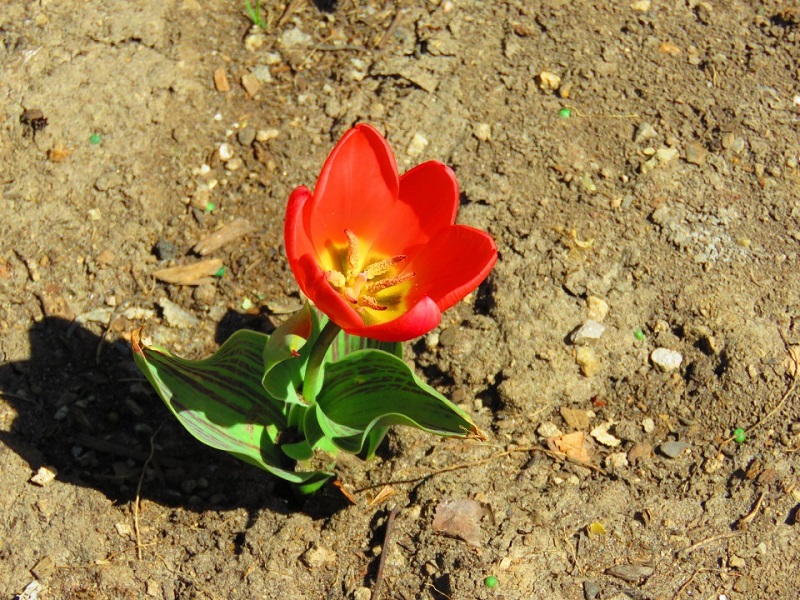
Flowers of the Planet

The Wonders and Mysteries of Nature


From historians to witchcraft adepts, nature has fascinated mankind since times immemorial. According to evolutionary psychologists, humans evolved to adapt to their environments, and coping with natural forces was a prerequisite to reproductive fitness and long term survival.

Today’s fears and anxieties over global warming and environmental and climate change remain a chilling topic. The importance of recycling and going green can only be understated. In hopes of a greener future, the following images were compiled based on their common theme: plants or flora. Other thematic gallery groupings can be found on the art index page.

Out of difficulties grow miracles (Jean de la Bruyere)
Follow your bliss and the universe will open doors where there were only walls (Joseph Campbell)
You must do the things you think you cannot do (Eleanor Roosevelt)
Your big opportunity may be right where you are now (Napoleon Hill)
Even if I knew that tomorrow the world would go to pieces, I would still plant my apple tree (Martin Luther)
No matter what people tell you, words and ideas can change the world (Robin Williams)
Change your thoughts and you change your world (Norman Vincent Peale)

Try to be like a turtle - at ease in your own shell (Bill Copeland)
Thought is the wind, knowledge the sail, and mankind the vessel (Augustus Hare)
Don’t judge each day by the harvest you reap but by the seeds that you plant (Robert Louis Stevenson)
Be brave enough to live life creatively. The creative place where no one else has ever been (Alan Alda)
Wonder rather than doubt is the root of all knowledge (Abraham Joshua Heschel)
Health is the greatest gift, contentment the greatest wealth, faithfulness the best relationship (Buddha)
We can’t help everyone, but everyone can help someone (Ronald Reagan)

Believe you can and you’re halfway there (Theodore Roosevelt)

Enthusiasm moves the world (Arthur Balfour)